

Let’s start with some history!
At the end of last year, I predicted an economic World War III, with Trump threatening Tariffs on imports to the US and then enacting the Tariffs in April. This policy was not without precedents.
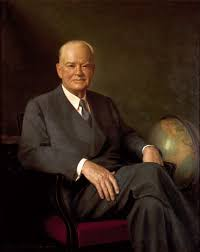
Hoover, villain or hero?
WASHINGTON, April 30,1925 – Secretary Hoover expressed the opinion today that the return of Great Britain to the gold standard would benefit the economic world at large. With the action taken by Great Britain, he said, all but about 10 per cent. of the world’s trade would go on a gold basis.
“We have gold because we cannot trust governments.”
President Hoover signed the Smoot-Hawley Tariff Act in 1930, the act increased duties on over 20,000 imported goods, with average tariffs rising by about 20%, to protect U.S. industries and farmers by making imported goods more expensive but provoking retaliatory tariffs from other countries.
This led to a collapse in international trade, worsened the Great Depression, and contributed a sharp decline in international trade, which plummeted by about 65% over the next five years. This collapse in trade worsened the economic downturn in the U.S. and globally, although it did not cause the Depression itself.
Economists and historians widely regard the act as a policy misstep, and it remains a cautionary example of protectionist policy in modern economic debates. Most of the decline in trade was due to a plunge in GDP in the U.S. and worldwide.
With the expansion of BRICS (Brazil, Russia, India, China, South Africa, Egypt, Ethiopia, Indonesia, Iran, and the United Arab Emirates) and its accelerating push toward de-dollarisation, global trade is increasingly shifting away from the US dollar. Within the BRICS bloc, we are now seeing trade settlements being conducted in gold.
While central banks have long settled reserve imbalances in gold “off the books,” what is new is the visible and deliberate accumulation of gold by central banks specifically for settlement purposes within the BRICS framework. In contrast, countries that sit outside BRICS and beyond direct US influence appear hesitant and indecisive.
Italy, in particular, has reignited debate—not over ownership of its gold reserves (officially the third largest in the world), but over how those reserves may be used.
Central bank gold reserves are, by definition, meant to underpin monetary stability. Historically, Italy has even threatened to exit the Eurozone when pressured to comply with fiscal constraints, a threat implicitly supported by its substantial gold holdings, which could back an independent national currency.
Today, however, the discussion has shifted toward whether the Italian government could use gold reserves to help balance its budget.
Should this occur, the implications could be far-reaching—potentially altering how markets value gold and paving the way for a de facto return to a gold-linked monetary system, where national economic credibility becomes increasingly tied to gold holdings.
At the same time, central banks—both large and small—are actively repatriating gold reserves from London and New York amid concerns over asset freezes or confiscation by US and UK courts, events that have already begun to materialize. This trend is contributing to a growing squeeze on physical gold liquidity.
Historically, central banks have been the primary source of liquidity for the London gold market, the world’s largest OTC gold trading hub. However, as gold is repatriated, this liquidity pool is shrinking.
Although the Bank of England serves as the lender of last resort to the London market, it holds only around 300 tonnes of gold on its own balance sheet highlighting the fragility of the current system.
Central bank gold buying has accelerated in recent months

World Gold Council
Re-classification of Central Bank gold reserves, and/or a squeeze of liquidity in London could see gold catapult 100% to over USD 8,000.
As one leading economist said: Central Banks don’t know what they’re doing, and investment banks don’t care what they do.

Still in London, we are seeing a further erosion of market transparency even as global interest in precious metals continues to grow. For more than a century, the London Gold and Silver Fixes operated alongside nearly fifty years of the London/Zurich Platinum and Palladium Fixes.
These mechanisms matched willing buyers and sellers through a transparent process in which a proposed price was adjusted until buy and sell volumes balanced.
Once equilibrium was reached, participants were obliged to transact at that
price, subject only to a small commission.
Anyone with an interest could follow the fixing process in real time via telephone or telex, adding or withdrawing orders until the chairman declared the price fixed. The resulting price was then widely disseminated —free of charge—through news services and newspapers. This was an open, transparent system, with costs borne only by those actually executing trades.
That model began to unravel in the early 2010s. Panic set in following an attempted class action by a group of US investors who—deliberately or otherwise—misunderstood the nature of the OTC market and conflated the term “fix” with price manipulation.
US regulators subsequently became involved, while London largely failed to mount a meaningful defence. Matters worsened with the emergence of the LIBOR scandal. Although LIBOR was fundamentally different—being a subjective rate based on submissions rather than a binding transaction mechanism—legal arguments were nonetheless allowed to draw direct and misleading comparisons.
Under these external but flawed pressures, the London fixes were dismantled and replaced with legally compliant benchmarks. When these new benchmarks were introduced, pricing—particularly in silver—often diverged materially from where the OTC market was trading immediately before and after the benchmark window.
While the number of direct participants increased, transparency for the broader market deteriorated. Non-participants could no longer observe or interact with the pricing process and were forced to wait up to 24 hours to access benchmark prices, making real-time trade verification or valuation impossible.
Today, access to benchmark price data has been further restricted through the introduction of fees. Obtaining current or historical benchmark prices— including the pre-2014 fixes—now costs GBP 15,400 per year.
This is hardly an incentive to trade on London benchmarks, nor does it represent any meaningful step toward greater transparency.

Since 2014, we have seen the majority of LIBOR convictions overturned. At the same time, the CFTC—having claimed, without presenting evidence, that the London fixes were susceptible to manipulation while insisting that futures exchanges could not be—has gone on to prosecute dozens of traders for market manipulation.
Ironically, this has coincided with futures prices becoming increasingly detached from spot delivery prices.
The push by lawyers and regulators to move away from market-makers providing two-way prices toward purely order-driven exchanges has resulted in greater volatility and frequent price gaps of 1% or more.
Market-makers dampen volatility by continuously quoting prices based on their judgement of where the market truly is, absorbing risk in the process. This role still requires human experience; while AI may eventually replicate it, we are not there yet.
Order-driven exchanges, by contrast, are prone to sudden dislocations. When large volumes of orders are withdrawn simultaneously and there are no nearby orders to transact against, prices gap sharply.
Even more troubling is that much of this activity is driven by algorithms that enter and cancel orders in milliseconds, probing prices far faster than any human can react.
Were a human trader to place and withdraw orders in the same manner, they would likely face prosecution. One might reasonably ask whether lawyers and regulators themselves could eventually be replaced by AI.
After the gap, liquidity returns and the market re-establishes itself at a new level but not before customers have been stopped out or suffered poor executions on resting orders. Remarkably, regulators consider this to be “customer protection.”
Contrast this with 9 September 1982. Gold had fallen more than 30%, from USD 410 to below USD 290. The managing director of the market-maker where I was working came out of his office and instructed the chief trader to buy gold.
One major investment bank was quoting gold with a USD 30 spread. Modern markets, advanced technology, and inexperienced traders—yet no one seems to remember how to fall back on pencil and paper.
As recently as last week—on 28 November, first notice day for the December futures contracts—there was a server failure with, apparently, no effective back-up system in place.
The chief trader replied, “But we only have sell orders.” The managing director responded, “It doesn’t matter—this has gone too far. ” Once our desk began buying, others followed, and the price recovered to USD 320. Later that afternoon, a senior official from the Bank of England called to thank the managing director for stabilising the market.
If the same actions were taken today, both the chief trader and the managing director would almost certainly be prosecuted for market manipulation.
As I stated in last months instalment: “Notes for your diary”
The big event with the exception of Platinum will be the December futures contract expiry. The December options will be declared on 24 November.
There are huge volumes of gold options and high volatility in the silver options. It will be a busy Monday. That will be followed by the first notice of delivery (or not) on 28 November for 1 December. Note these dates well.

We will see this pattern repeated at the end of February 2026.
With Silver then crashing off the most in the following months, having gained the most over the preceding twelve months. Prices will then recover late August/early September to set new highs to end 2026.
So what about Platinum?
The much anticipated opening of the Guangzhou Futures Exchange (GFEX) for Platinum and Palladium on 27 November had an immediate effect.
Platinum jumping 4% at the opening and still climbing. Platinum lease rates are now closing in on 20%.

So what can we expect for next year?
In 2025 we have seen Gold up by 64 %; Silver 100 %; Platinum 84% and Palladium 63%. 2026 will be much the same, but with a few noticeable differences.
Why do I focus on percentage changes? Because they provide a more accurate representation of how markets actually move. Platinum jumping 4% at the opening and still climbing. Platinum lease rates are now closing in on 20%.
A USD 28 move in silver may sound insignificant when compared to a USD 700 move in platinum or a USD 1,000 move in gold, but in percentage terms it often represents a far superior return on an investor’s capital.

So what about 2026?
Gold is set to continue its upward trajectory. De-dollarisation is accelerating, driving sustained central bank demand. Gold has now overtaken the euro and US Treasury debt to become the second-largest reserve asset for central banks, behind only the US dollar.
After polishing my crystal ball, sacrificing a goat and examining its entrails, studying the stars, analysing countless charts and graphs—then flipping them upside down and reviewing them again—and finally inspecting the dregs of a cold mug of tea on my desk, I’ve arrived at the following conclusions:
In addition, governments—including the US—diversifying into cryptocurrencies may ultimately reinforce gold’s appeal. These digital assets effectively represent a new form of quantitative easing; they are monetary expansion by another name and, over time, inherently inflationary.
Gold’s advance in 2026 is likely to be smoother than in 2025, with disruptions mainly arising from political intervention in global economics.
Target: USD 5,500. Stretched target: USD 6,600.
Silver, by contrast, is likely to be even more volatile than it was in 2025. The sharper the rallies, the more violent the pullbacks. Expect rapid upside moves in Q1, followed by significant corrections in Q2; consolidation in Q3, and a powerful rally into Q4.
Ultimately, silver is reaching toward the USD 92 level—but the real question is whether investors are prepared to endure the volatility, or prefer to step aside in March and re-enter around August. It’s a difficult call.

Platinum, supported by GFEX and ongoing supply tightness, is likely to continue setting new highs.
Palladium is likely to be quieter than the other metals, but that does not make it irrelevant.
In 2025, it delivered an overall return comparable to gold—exceeding 60%. It still has the capacity to appreciate by around 20% without much effort, and while another 60% year remains possible, it is less likely than for the other metals.


